Motifs and Submotifs

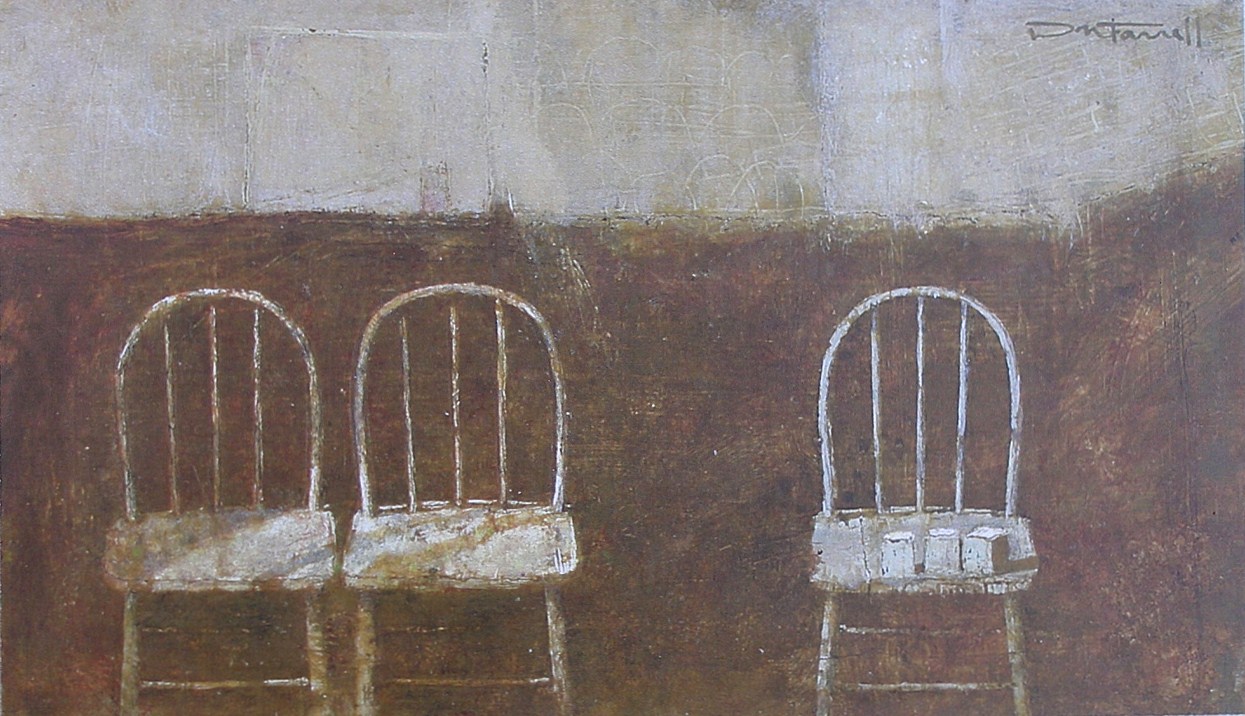
Don Farrell - Three Blocks - 1998 - 15 x 25 cm - 6 x 10 in - egg tempera

This small painting is an excellent example for showing the importance of shape motifs. The composition has a rectangle motif, supported by a sub motif of rhythmic loops.

Let me take you to the top area first.  Note how the area is made up from a series of subtle rectangles.  They must be subtle in order not to compete with the focus of the painting.

The chair seats and the three blocks are other notes in the rectangle motif.  The blocks, being the focus, are supported by slightly emphasizing the two rungs just below, (another rectangle.)

There is a very important small rectangle above the middle chair, which echoes the blocks.  In compositional terms this pulls your gaze gently from the blocks.  Pulls are wonderful compositional elements, if they are in tune. They musn’t disrupt the viewer’s gaze or compete.

I will be mentioning and showing more pulls and pauses in the works of many notable artists in upcoming posts.

The sub motif (the loops) which are the shapes of the chair backs, are repeated in the top area as shown in this detail.
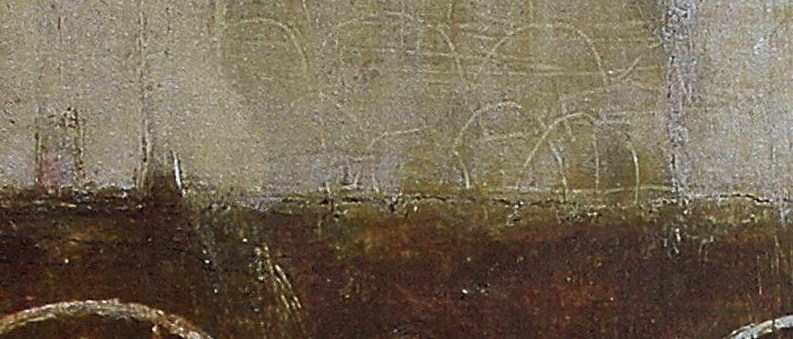
These Integrate the chairs with the background, which is very important.

Another important note is how each chair is painted as if you are directly in front.  Very important, as this frees the viewer’s movement as mentioned in the post on Cezanne’s painting “Receptacles, Fruit and Biscuits on a Sideboard”


Influences (Giorgio Morandi)

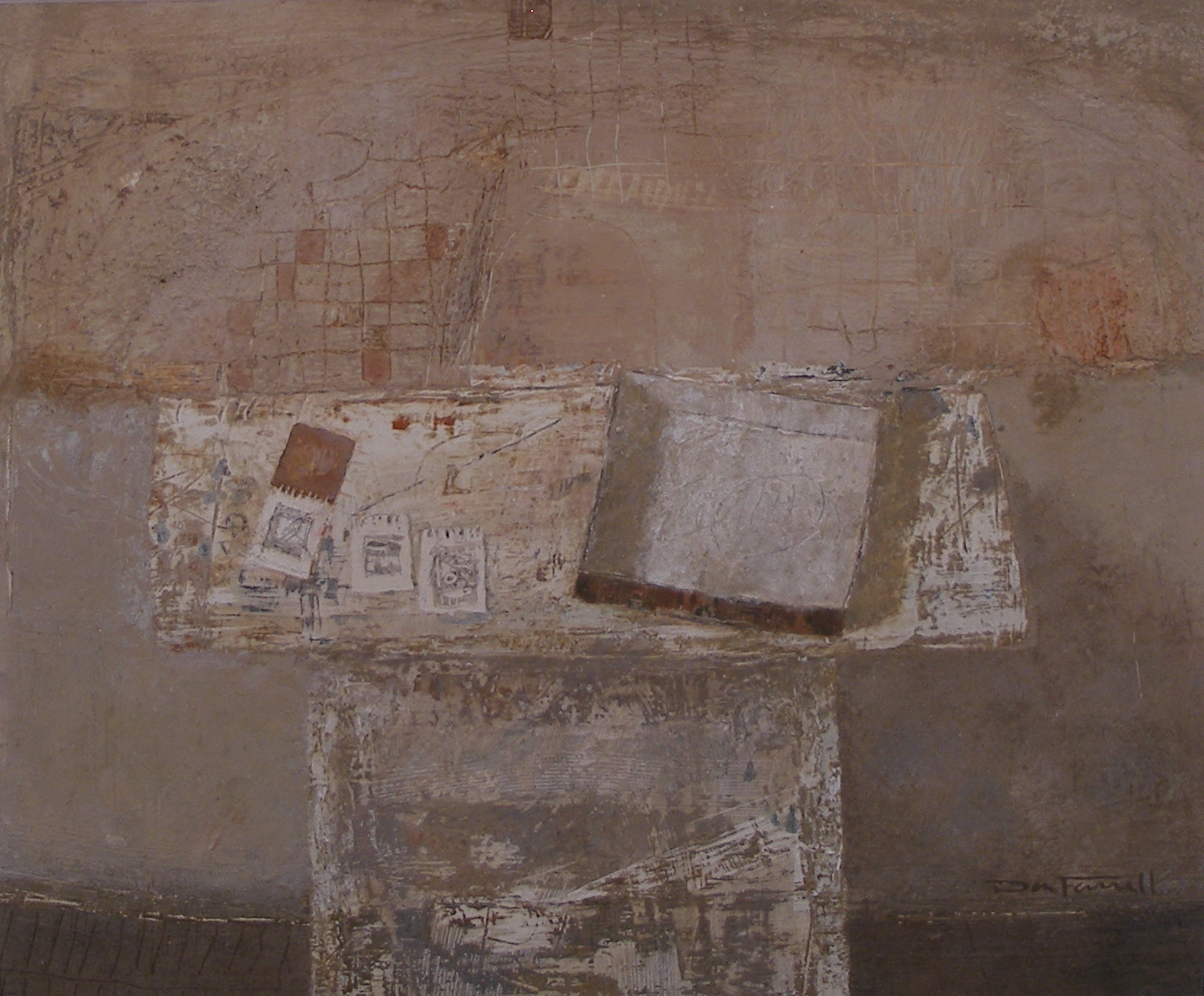
Don Farrell - Soaking Pan - 1999 - 25 x 30 cm - 10 x 12 in - egg tempera

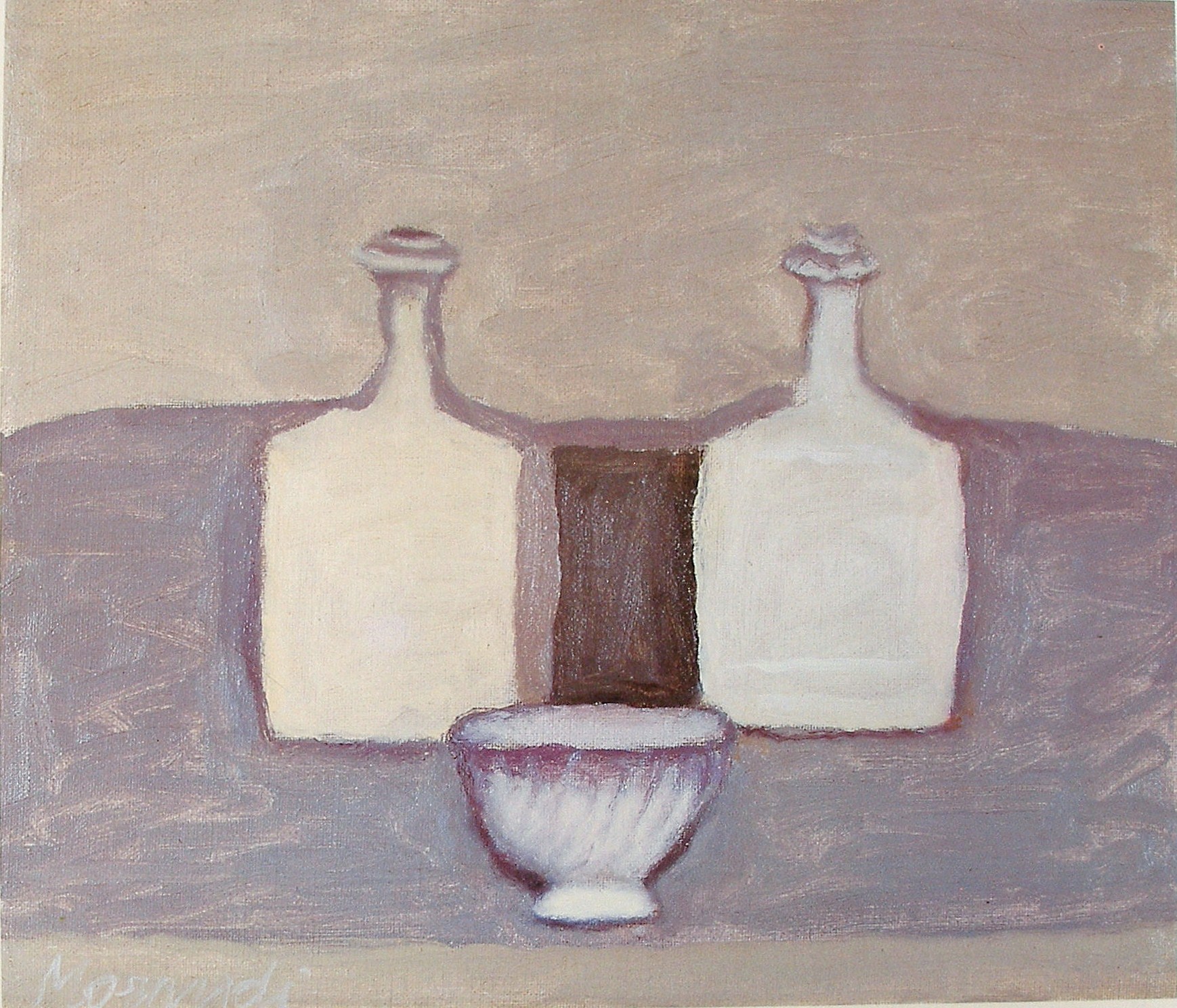
I had the pleasure of seeing a retrospective of Morandi’s work in London a few years ago and he has stayed with me ever since. In particular, I was impressed with his spatial considerations and how he expressed them in his still lifes.

I was thinking of my response to his considerations when I made the above painting of my soaking pan. My goal was to create a harmonious spacial feeling through the arrangement of rectangles.

Now, using an influence doesn’t make things easy. For example, with Soaking Pan, which has a rectangular motif, I had difficulty keeping the painting from feeling static.

I had started by supporting the soaking pan with a similar shape above it on the wall. This supporting shape then takes the eye to the small dark square at the top, ensuring the viewer takes in all of the painting. The colour value of this square then takes your eye to the sketch pad before returning you to the front of the soaking pan. (The three sketches also harmonize with the front of the soaking pan, but are more supportive.)

So many rectangles leave the image static if left completely on their own. There is the wonderful little angle on the table which appeared accidentally and stayed, but this was still straight, and I needed more.

To refine and resolve this composition, I added the white line at the bottom right which takes you across the front of the table to the right edge of the soaking pan. This provides an integrating movement for the painting, which works well, but the painting still felt unresolved.

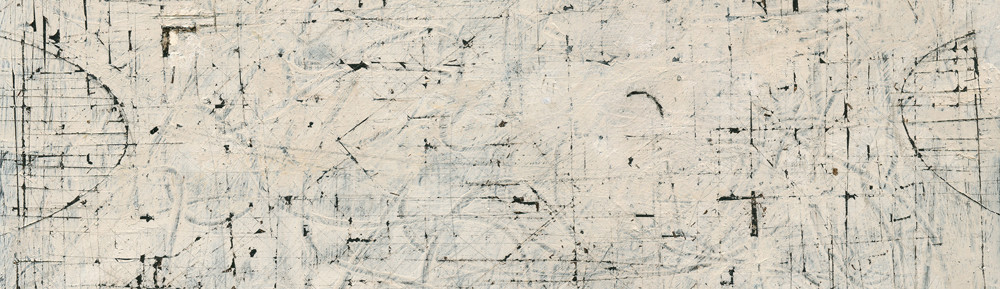
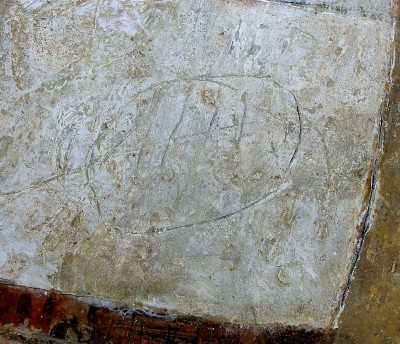
Soaking Pan – detail

I fussed and fumbled for a few days, and then one morning, I scratched an oval in the soaking pan and got that special feeling you get when you know you’ve finally succeeded. Even though the mark is subtle, it was enough, and the composition was complete.

Giorgio Morandi - Still Life - 1959 - 30 x 35 cm - 12 x 14 in - oil on canvas


Influences (Andrew Wyeth)

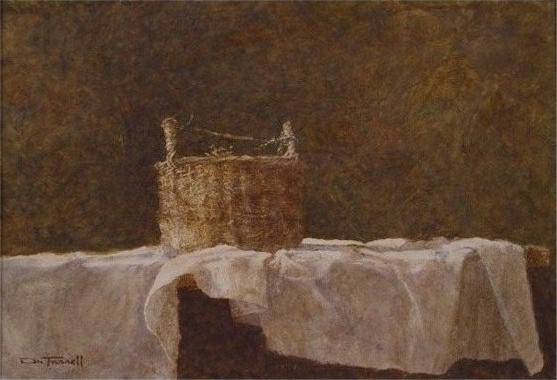
Don Farrell - Margaret's Basket - 1983 - 23 x 33 cm - 9 x 13 in - watercolour

Margaret’s Basket is one of the first paintings in which I consciously allowed myself to be influenced by another artist.

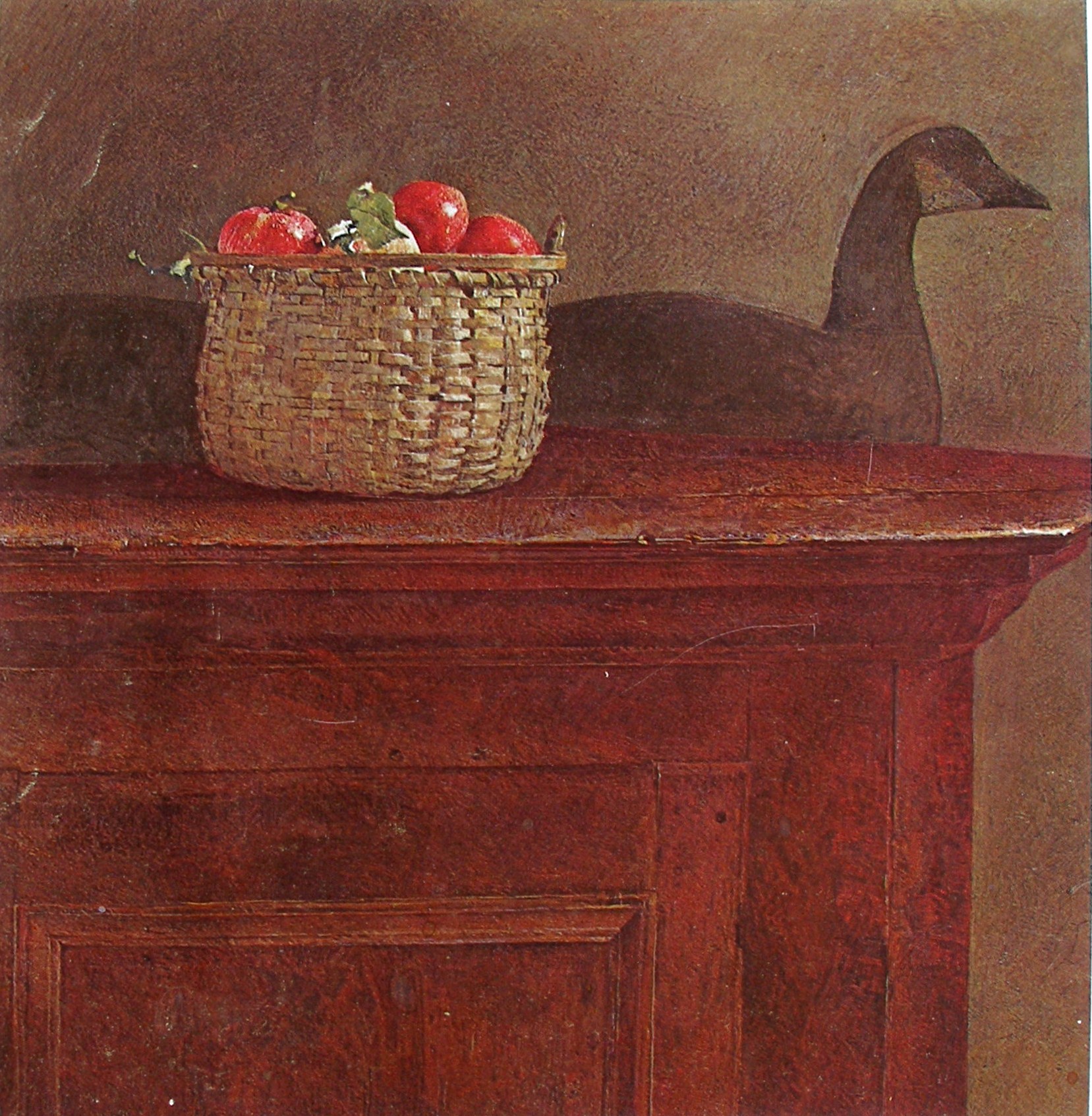
Around 1980, I was still mostly concerned with representation and accuracy in my work.  I was studying the wonderful details of Andrew Wyeth when it suddenly occurred to me – Wyeth’s strength is in the shapes he chooses!  This insight changed my approach forever.  Realizing that the viewer responds to shapes before detail, my new focus was trying to achieve a harmony of shapes.  This harmony is not something that the viewer needs to be aware of, in fact I expect it to be mostly subconscious.  The artist, however, uses shapes to direct the viewer and inform the details.

Margaret’s Basket is an arrangement of triangles. There are three prominent ones that hold the painting together, as well as other supporting triangles.   Another way of putting it is this painting has a triangle motif.

Of course, shapes aren’t the only considerations for a painting, and I would quickly like to introduce one other because of how easy it is to see in this painting.  I call it “integration”.  Notice how the left handle of the basket is in line with a fold in the drapery below it?  I used this to keep the viewer’s eye from straying out of the left side of the painting.

The beautiful pursuit of art is not in just knowing these things, but in being able to use them poetically.

Andrew Wyeth - Wolf Rivers - 1959 - 34 x 33 cm - 13 1/2 x 13 in - tempera